
Kojic Acid Cream Benefits: Evidence, Safety and Clinical Use for Practitioners
Kojic acid cream benefits explained: tyrosinase inhibition, evidence in melasma and post-inflammatory pigmentation, combinations and safety precautions.
Kojic acid cream benefits centre on its ability to help reduce hyperpigmentation by inhibiting tyrosinase, the key enzyme in melanin synthesis. This complete guide lets dermatologists, aesthetic physicians and pharmacists explore the science of kojic acid: the mechanism, the evidence for brighter, clearer skin, visible changes in pigmentation and acne marks, sensible combinations, and how to apply it safely within a skincare routine. Readers will discover what the data support and what they do not.
Kojic Acid Cream Benefits: What the Evidence Supports
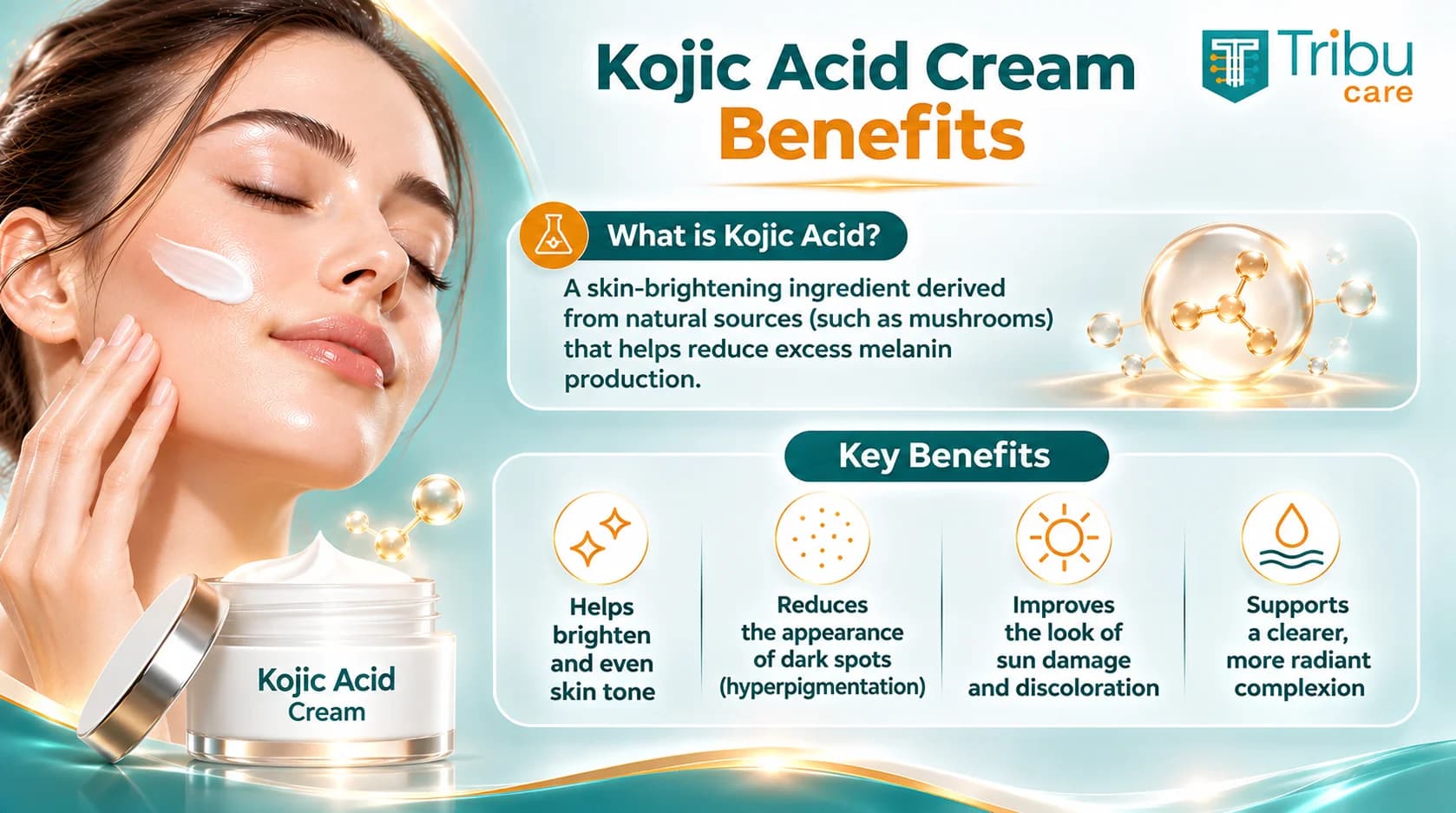
Kojic acid cream benefits are best supported for helping reduce hyperpigmentation, particularly melasma and post-inflammatory marks, through tyrosinase inhibition; the evidence is mostly small clinical studies, often with kojic acid combined with other actives.
Kojic acid (INCI: Kojic Acid) is a fungal metabolite originally isolated from Aspergillus species and produced during fermentation of rice. It is widely used in skin-brightening cosmetics. The table summarises how strongly the literature supports each commonly cited benefit.
| Claimed benefit | Level of support | Comment |
|---|---|---|
| Helps reduce melasma-related pigmentation | Limited to moderate | Small studies, usually in combination with glycolic acid or another depigmenting agent |
| Improves the appearance of post-inflammatory hyperpigmentation | Limited | Mostly extrapolated from melasma data and clinical experience |
| Brightening of uneven skin tone and sun-induced spots | Limited | Cosmetic use; controlled data are scarce |
| Helps fade the appearance of acne marks | Limited | Marks are pigmentary, not scars; textural scars need other approaches |
| Antioxidant and antimicrobial activity | Laboratory data | In-vitro findings; clinical relevance for skin brightening is unclear |
The consistent message is that kojic acid is a reasonable, well-characterised brightening active, not a standalone solution. Patients should learn that a more even, glowing complexion follows steady brightening with sun protection, not extreme measures such as stacking strong actives or aggressive peels. Results vary between individuals and depend on pigment depth, sun protection and adherence.
How Kojic Acid Works: Tyrosinase Inhibition and the Science of Brighter Skin
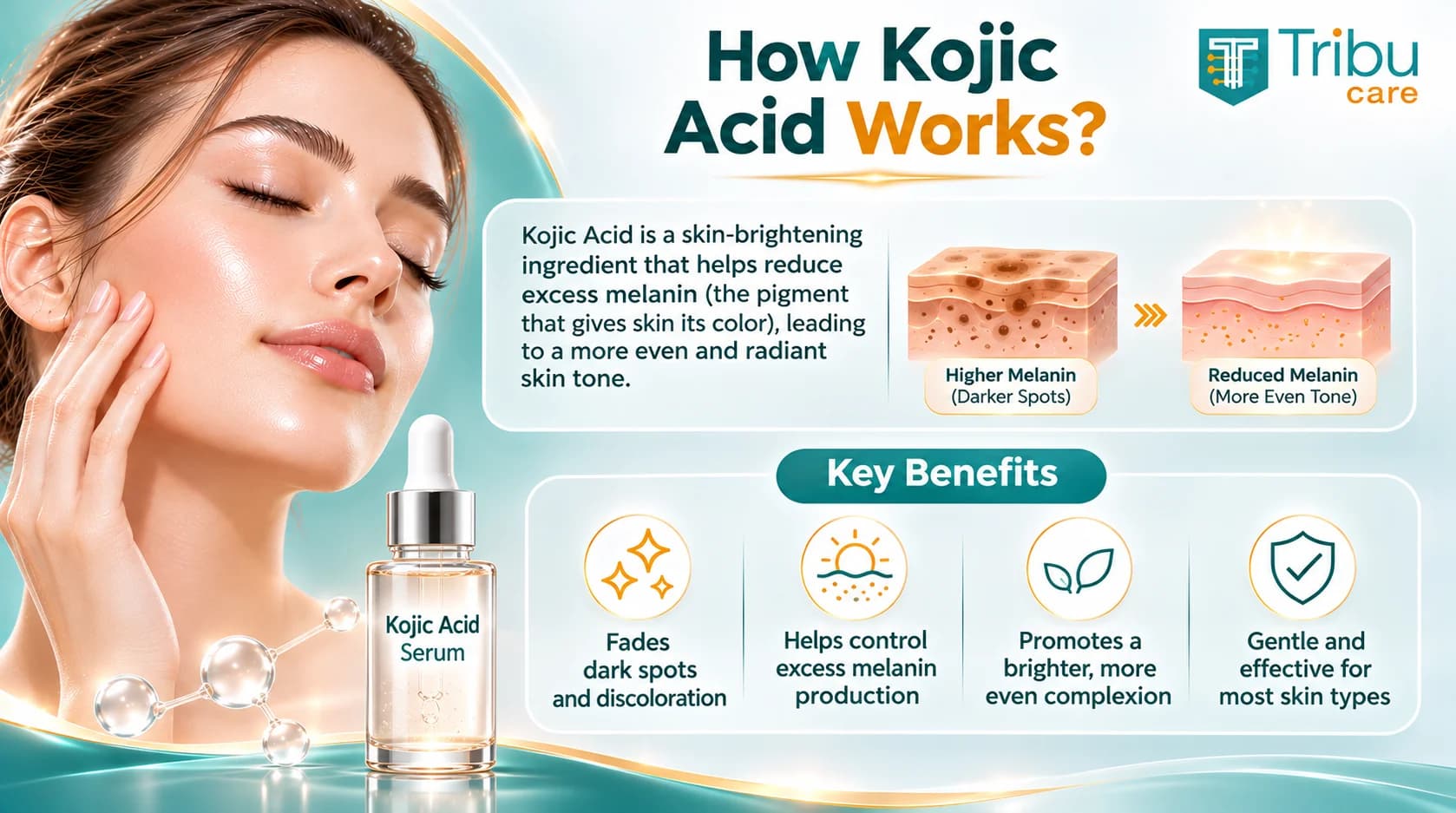
Kojic acid helps reduce pigmentation by chelating copper at the active site of tyrosinase, the enzyme that converts tyrosine to dopaquinone, so less melanin is produced by melanocytes.
Melanogenesis begins when tyrosinase hydroxylates L-tyrosine to L-DOPA and oxidises it to dopaquinone, which proceeds to eumelanin and pheomelanin. Because kojic acid binds the copper ions tyrosinase needs, it reduces new pigment formation rather than removing existing melanin from the epidermis.
| Feature | Kojic acid |
|---|---|
| INCI name | Kojic Acid |
| Primary mechanism | Copper chelation, inhibition of tyrosinase |
| Effect on existing pigment | Does not remove it directly; visible change follows normal epidermal turnover |
| Other reported properties | Antioxidant and antimicrobial activity in laboratory studies |
| Stability | Sensitive to light, air and heat; formulation and packaging matter |
Two practical points follow. First, pigment fading is gradual, so assessment at a few weeks is premature. Second, kojic acid works on the production side only, so ultraviolet and visible-light exposure can reverse progress unless sun protection is consistent.
Pigmentation, Acne Marks and Dark Spots: Where Kojic Acid Is Used
Kojic acid is most often used to help improve the appearance of melasma, post-inflammatory hyperpigmentation and acne marks; evidence is strongest for melasma, where it is typically studied in combination regimens.
Published clinical work includes small trials in which kojic acid was combined with glycolic acid or with hydroquinone for melasma and related conditions (Garcia and Fulton, 1996; Lim, 1999). These studies report improvement, but combination designs make it difficult to isolate the contribution of kojic acid alone.
| Indication | Practical position |
|---|---|
| Melasma | Used as part of a regimen with sun protection; relapse is common |
| Post-inflammatory hyperpigmentation | Reasonable adjunct once inflammation has settled |
| Acne marks (flat, pigmented) | Helps fade the appearance of marks; not for atrophic or raised scars |
| Solar lentigines and uneven tone | Cosmetic brightening; results vary |
Acne marks deserve a specific note. Persistent redness (post-inflammatory erythema) responds differently from brown post-inflammatory hyperpigmentation, so the type of mark should be identified before a pigment-targeting active is chosen. Active acne should be managed in parallel, since new lesions create new marks.
Deeper dermal pigment, as in some mixed melasma, responds less predictably to topical depigmenting agents. Persistent, changing or irregular pigmented lesions need dermatological assessment, not cosmetic treatment.
Combinations: Pairing Kojic Acid With Other Actives, and What to Avoid
Kojic acid is commonly combined with other brightening actives that act on different steps of pigmentation, but combinations raise irritation risk and need staged introduction.
| Partner | Rationale | Precaution |
|---|---|---|
| Alpha arbutin | Also inhibits tyrosinase; complementary brightening | Generally well tolerated |
| Niacinamide | Reduces melanosome transfer to keratinocytes | Generally well tolerated |
| Glycolic acid | Exfoliation supports turnover of pigmented cells | Higher irritation and photosensitivity risk |
| Licorice extract | Soothing, tyrosinase-inhibiting botanical | Check for sensitivity |
| Vitamin C | Antioxidant, brightening | May irritate when layered with other actives |
| Broad-spectrum sunscreen | Prevents pigment relapse | Essential, not optional |
What to avoid or stage carefully
- Do not start several new actives at once; introduce them one at a time so reactions can be attributed.
- Avoid combining with strong exfoliants, retinoids or peels on the same night unless supervised by a clinician.
- Avoid use on broken, sunburned or inflamed skin.
- Hydroquinone-containing regimens are medical decisions and belong with the prescribing physician.
Kojic Acid Safety: Side Effects, Skin Sensitivity and Precautions
Kojic acid is generally tolerated at cosmetic concentrations, but contact dermatitis, irritation and increased sun sensitivity are the main reported adverse effects, so patch testing and sun protection are advised.
| Adverse effect or concern | Note |
|---|---|
| Allergic and irritant contact dermatitis | Reported in the literature; patch test before regular use, especially in sensitive skin |
| Erythema, dryness, stinging | More likely with higher concentrations or combination with exfoliants |
| Photosensitivity | Sun protection is essential during and after use |
| Pigment rebound | Can follow irritation or sun exposure |
| Regulatory limits | Concentration limits for cosmetic use exist in some jurisdictions; check the applicable local regulation and the product label |
Special groups
- Pregnancy and lactation: data are limited; advise consulting the treating physician before use.
- Sensitive skin, eczema or active dermatitis: avoid until the barrier has recovered.
- Children: not recommended without medical advice.
- Open wounds or broken skin: do not apply.
Stop use and seek advice if redness, swelling, blistering or persistent burning occurs. Cosmetic brightening products are not a substitute for diagnosis of pigmentary disorders.
Practical Skincare Routine and Counselling Points for Clinic and Pharmacy
A safe routine introduces kojic acid gradually on clean, dry skin, pairs it with daily broad-spectrum sunscreen, and reviews progress after several weeks rather than days.
| Step | Consideration |
|---|---|
| 1. Assess | Identify the pigment type (melasma, post-inflammatory, solar), skin type and current actives |
| 2. Patch test | Small area on the inner forearm or behind the ear before facial use |
| 3. Start slowly | Begin at a low frequency and increase as tolerated, following the product label |
| 4. Protect | Moisturiser in the day, broad-spectrum sunscreen applied and reapplied |
| 5. Review | Reassess after several weeks; refer if no improvement or if irritation occurs |
Counselling points
- Results vary from person to person and are gradual.
- Sun exposure can undo progress, so protection is part of the treatment plan.
- Avoid applying to broken skin and avoid the eye area unless the label allows. A kojic acid mask or leave-on product shouldn't stay on longer than the label states, and should not be layered with exfoliating treatments the same evening.
- Pigmentation that is dark, changing, asymmetric or rapidly growing should be examined by a dermatologist.
- Products for the intimate area are cosmetic and should be used only as labelled.
Frequently Asked Questions on Kojic Acid Cream
What are the main kojic acid cream benefits?
Kojic acid cream helps reduce the appearance of hyperpigmentation by inhibiting tyrosinase. It is used for melasma, post-inflammatory marks and uneven tone, with limited evidence and gradual, variable results.
Can kojic acid fade acne marks?
It can help fade the appearance of flat, brown acne marks. It does not improve textural scars, and red marks respond differently, so identify the mark type first.
Is kojic acid safe for daily use?
It is generally tolerated at cosmetic concentrations, but contact dermatitis and photosensitivity are reported. Patch test first, use daily sunscreen and follow the product label.
Can kojic acid be used in pregnancy?
Data are limited, so pregnant and breastfeeding patients should consult their physician before use.
How long before results are visible?
Pigment changes follow epidermal turnover, so assessment after several weeks is more meaningful than after days. Results vary and depend on sun protection and adherence.
Conclusion: Kojic Acid Cream Benefits in Practice
Kojic acid cream benefits are real but modest: it is a well-characterised tyrosinase inhibitor that helps improve the appearance of pigmentation when used with sun protection and realistic expectations.
The evidence is strongest for melasma-type pigmentation and mostly comes from small studies of combination regimens. Correct diagnosis of the pigment type, patch testing, staged introduction of actives and daily photoprotection matter more than the choice of any single ingredient. Pigmentation that is atypical, changing or persistent should be assessed by a dermatologist.
References
- Saeedi M, Eslamifar M, Khezri K. Kojic acid applications in cosmetic and pharmaceutical preparations. Biomedicine & Pharmacotherapy. 2019.
- Garcia A, Fulton JE Jr. The combination of glycolic acid and hydroquinone or kojic acid for the treatment of melasma and related conditions. Dermatologic Surgery. 1996.
- Lim JT. Treatment of melasma using kojic acid in a gel containing hydroxyanisole and glycolic acid. Dermatologic Surgery. 1999.
Related Reading
More insights from TribuCare
Clinical Practice
Biotin for Hair: Evidence, Dosage and Clinical Considerations for Practitioners
Biotin for hair: what the evidence says on hair growth, deficiency, dosage, lab-test interference and when supplementation is justified.
November 1, 2026Beauty Innovation
Liposomal Glutathione Benefits: Evidence, Bioavailability and Safe Use for Practitioners
Liposomal glutathione benefits explained: antioxidant role, absorption, evidence for skin, liver and immune support, safety precautions and practical use.
November 1, 2026Beauty Innovation
Retinyl Palmitate for Skin: Evidence, Mechanism and Safe Use for Practitioners
Retinyl palmitate for skin explained: a fat-soluble vitamin A ester, how it compares with retinol, evidence, formulation, combinations and safety precautions.
November 1, 2026