
Liposomal Glutathione Benefits: Evidence, Bioavailability and Safe Use for Practitioners
Liposomal glutathione benefits explained: antioxidant role, absorption, evidence for skin, liver and immune support, safety precautions and practical use.
Liposomal glutathione benefits centre on antioxidant support: glutathione is the body's main intracellular antioxidant, and liposomal delivery aims to improve its absorption from oral supplements. This guide reviews the science, bioavailability, clinical evidence, safety and practical use for dermatologists, aesthetic physicians and pharmacists.
Liposomal Glutathione Benefits: What the Evidence Supports
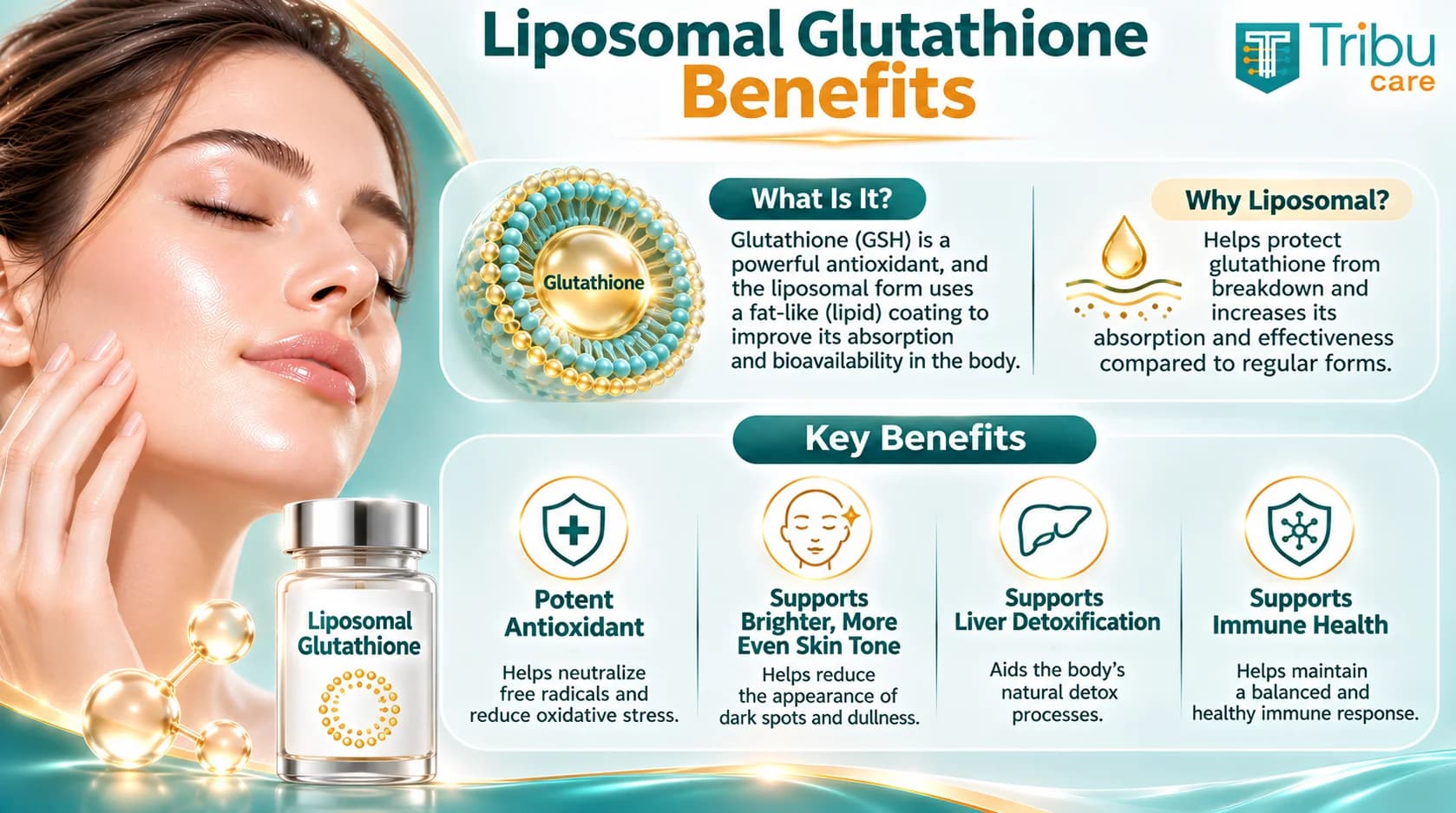
Liposomal glutathione benefits are best supported for raising measured glutathione stores and markers of antioxidant status; evidence for clinical outcomes in skin, liver and immune health is limited and mostly preliminary.
Glutathione (INCI: Glutathione) is a tripeptide made of the amino acids glutamate, cysteine and glycine. Randomised trials of oral glutathione, including a liposomal formulation, report increases in blood or cell glutathione levels (Richie et al., 2015; Sinha et al., 2018). Whether these biochemical changes translate into patient-relevant outcomes is less clear.
| Claimed benefit | Level of support | Comment |
|---|---|---|
| Raises glutathione levels in blood and cells | Moderate | Small randomised studies; healthy volunteers |
| Antioxidant support | Moderate for biomarkers | Reported changes in oxidative stress markers |
| Immune function support | Limited | Preliminary immune marker changes in one liposomal study |
| Skin: appearance of tone and ageing | Limited | Small trials; short follow-up; variable design |
| Liver support | Limited | Mechanistic rationale; clinical data in healthy people are scarce |
| Skin lightening | Limited and debated | Not an approved indication; see safety notes |
The fair summary is a plausible antioxidant supplement with biochemical evidence, not a treatment for any disease.
What Glutathione Is: Amino Acids, Antioxidant Role and Intracellular Function
Glutathione is a tripeptide of glutamate, cysteine and glycine that acts as the main intracellular antioxidant, neutralising reactive oxygen species and recycling other antioxidants such as vitamin C.
It exists in reduced (GSH) and oxidised (GSSG) forms; the ratio reflects cellular redox status. Cysteine availability limits its synthesis, which is why precursors such as N-acetylcysteine are discussed alongside direct supplementation. Glutathione also supports phase II conjugation reactions in the liver, the biochemical basis of the term detoxification in the literature.
| Feature | Detail |
|---|---|
| Composition | Glutamate, cysteine, glycine |
| Main forms | Reduced (GSH) and oxidised (GSSG) |
| Main roles | Free-radical scavenging, redox balance, conjugation of xenobiotics |
| Rate-limiting step | Cysteine availability |
| Regeneration | Glutathione reductase, NADPH-dependent |
| Location | Predominantly intracellular, high in the liver |
Blood glutathione does not move freely into cells as the intact tripeptide, which is relevant to how supplements are designed.
Absorption and Bioavailability: Oral Versus Liposomal Delivery
Standard oral glutathione has limited and variable bioavailability because it is hydrolysed in the gut, and liposomal delivery is intended to protect it, though comparative human data are limited.
Early pharmacokinetic work reported poor systemic availability of oral glutathione in healthy volunteers (Witschi et al., 1992). Later randomised studies found that daily oral glutathione, including a liposomal form, can raise body stores over weeks (Richie et al., 2015; Sinha et al., 2018). Liposomes are phospholipid vesicles that encapsulate the active, with the aim of protecting it from digestion and aiding uptake.
| Delivery form | Rationale | Evidence status |
|---|---|---|
| Standard oral glutathione | Simple, widely available | Older data show poor availability; later studies show rises over weeks |
| Liposomal oral glutathione | Vesicle protection, aims to improve absorption | Supported by small trials; head-to-head human data are limited |
| Precursors (N-acetylcysteine) | Supply cysteine for synthesis | Established precursor strategy |
| Intravenous | Bypasses the gut | Medical setting; not a supplement; outside the scope of this guide |
Claims of superior absorption should therefore be treated as plausible but not proven for every product, since formulation quality varies.
Glutathione for Skin, Liver and Immune Support: Evidence by Area
Evidence for glutathione in skin, liver and immune function is preliminary: small trials report biomarker or appearance changes, but large, long-term studies with clinical endpoints are lacking.
| Area | What studies report | Limitations |
|---|---|---|
| Skin tone and appearance | Small randomised trials of oral glutathione reported changes in skin melanin index in some participants (Arjinpathana and Asawanonda, 2012) | Small samples, short duration, mixed designs; not an approved indication |
| Skin ageing | A small trial reported changes in skin wrinkle and elasticity measures (Weschawalit et al., 2017) | Small, short; results need confirmation |
| Immune markers | A liposomal study reported changes in immune markers such as natural killer cell activity (Sinha et al., 2018) | Healthy volunteers; surrogate markers |
| Liver and detoxification | Strong biochemical rationale through phase II conjugation | Few clinical outcome data in healthy people |
| Oxidative stress markers | Reductions reported in some studies | Surrogate endpoints |
For skin, the compliant framing is that glutathione may help support skin health through its antioxidant role. Tone-lightening claims should not be made, since evidence is limited and the long-term safety of intentional skin lightening is not established.
Liver conditions require medical care. A supplement does not replace diagnosis or treatment.
Glutathione Forms and Dosage: How to Compare Products
Products differ in form, labelled amount and companion ingredients, and the labelled daily amount should be followed since no single established supplemental dose applies across products and indications.
| Form | Characteristics | Consideration |
|---|---|---|
| Reduced glutathione (capsule or tablet) | Common, lower cost | Variable absorption |
| Liposomal glutathione | Phospholipid vesicle delivery | Formulation quality varies; check the label |
| S-acetyl glutathione | Acetylated form sold as a stability-enhanced option | Human data are limited |
| Combination products | May add alpha-lipoic acid or vitamin C | Review the full ingredient list and total intake |
What to check on the label
- The form of glutathione and the amount per serving.
- Companion antioxidants and their amounts.
- Allergens, such as soy or egg lecithin sources in liposomes.
- Instructions on timing, for example after meals, and the maximum daily intake.
The dosage used in published trials varies, and trial doses should not be applied to individual patients without medical guidance.
Glutathione Safety: Side Effects, Concerns and Who Should Seek Advice
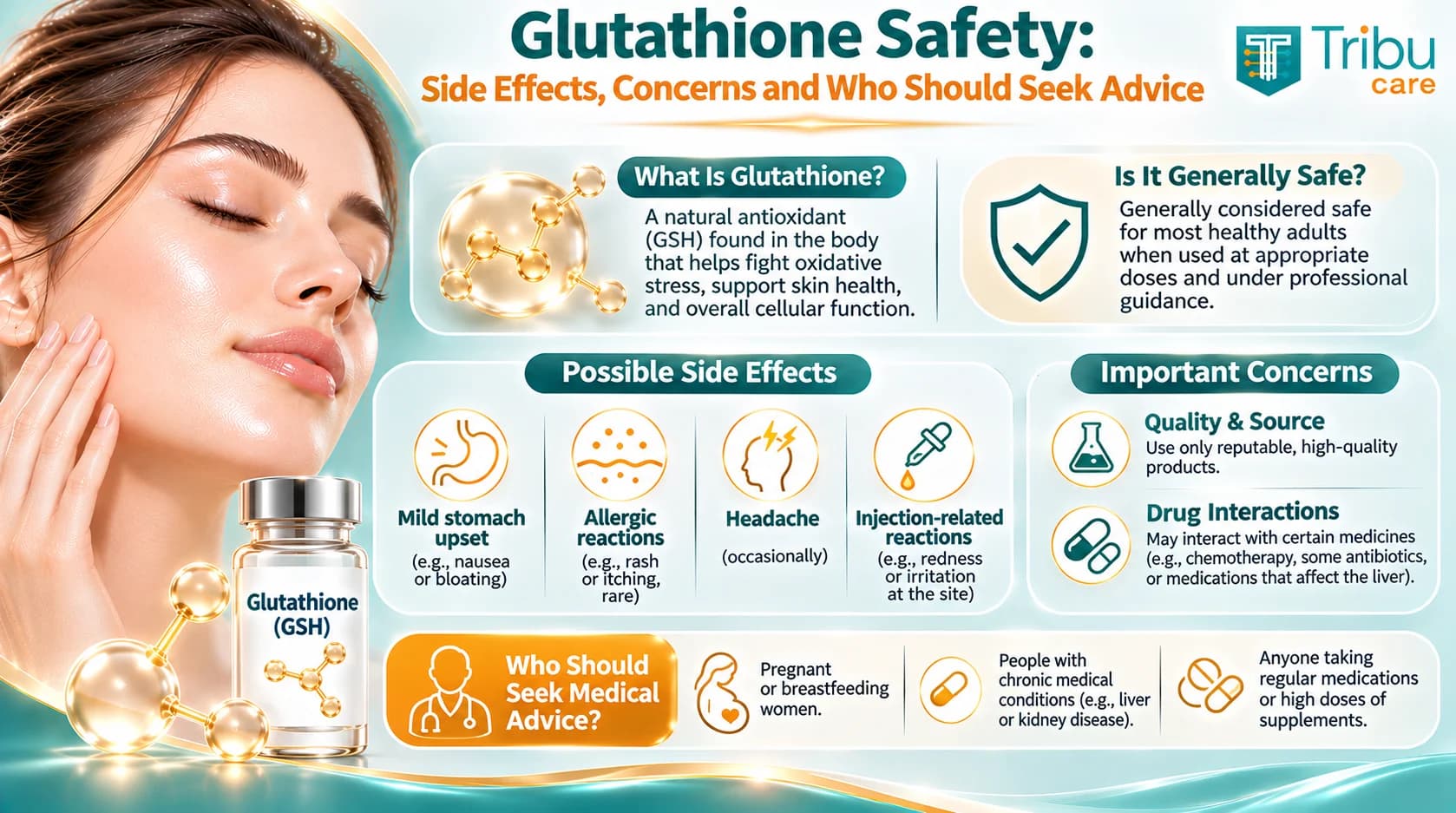
Oral glutathione is generally well tolerated in short-term studies, but data on long-term use, pregnancy and lactation are limited, so patients with medical conditions or on medicines should consult a doctor first.
| Concern | Note |
|---|---|
| Gastrointestinal effects | Bloating, cramps or loose stools reported in some users |
| Allergy or hypersensitivity | Possible to any ingredient, including lecithin or capsule components |
| Asthma | Inhaled glutathione has been associated with bronchospasm; oral use in asthmatic patients warrants caution |
| Pregnancy and lactation | Insufficient safety data; consult the treating physician |
| Medicines and chronic disease | Patients on chemotherapy, with liver or kidney disease, or on regular medication should seek medical advice |
| Intravenous use for skin lightening | Safety concerns have been raised by regulators; this is outside supplement use |
Special groups
- Pregnant and breastfeeding patients: consult the physician before use.
- Children: not recommended without medical advice.
- Patients with known allergies: check the full ingredient list.
Stop use and seek advice if rash, swelling, breathing difficulty or persistent digestive symptoms occur. Food supplements do not replace a balanced diet.
Practical Routine and Counselling for Clinic and Pharmacy
A practical approach is to confirm suitability, follow the labelled daily amount, review progress after a defined period, and keep glutathione within a balanced diet, sun protection and sleep routine.
| Step | Consideration |
|---|---|
| 1. Assess | Medical history, medicines, pregnancy or lactation, allergies |
| 2. Choose | Review form, labelled amount and companion ingredients |
| 3. Use as labelled | Typical labels advise a daily capsule after a meal; follow the specific product |
| 4. Combine with basics | Sun protection, balanced diet, adequate sleep |
| 5. Review | Reassess after several weeks; stop if adverse effects occur |
Counselling points
- It is a food supplement and does not replace a balanced diet.
- Results vary between individuals and are not guaranteed.
- Do not use it with the expectation of changing skin colour.
- Tell the doctor about the supplement before surgery, tests or new medicines.
- Persistent skin, liver or immune concerns need clinical evaluation.
Frequently Asked Questions on Liposomal Glutathione
What are the main liposomal glutathione benefits?
Liposomal glutathione can raise glutathione stores and support antioxidant status. Evidence for skin, liver and immune outcomes is limited and preliminary.
Is liposomal glutathione better absorbed?
It is designed to improve absorption, and small studies show rises in glutathione levels. Head-to-head human comparisons are limited, so superiority is plausible but not proven.
Does glutathione lighten skin?
Evidence is limited and the indication is not approved. No lightening claim should be made, and supplements should not be used for that purpose.
Is it safe in pregnancy?
Safety data are insufficient. Pregnant and breastfeeding patients should consult their physician before use.
How long should it be taken?
Follow the product label and review with a doctor. Long-term safety data are limited.
Conclusion: Liposomal Glutathione Benefits in Practice
Liposomal glutathione benefits are mainly antioxidant and biochemical: it can raise glutathione stores, while clinical outcomes in skin, liver and immunity remain under study.
The evidence supports glutathione as a plausible antioxidant supplement with an acceptable short-term safety profile. Product quality, labelled amounts, patient history and realistic expectations matter more than delivery claims. Skin concerns, liver disease and immune problems need clinical evaluation, and a supplement does not replace a balanced diet or treatment.
References
- Witschi A, Reddy S, Stofer B, Lauterburg BH. The systemic availability of oral glutathione. European Journal of Clinical Pharmacology. 1992.
- Richie JP Jr, Nichenametla S, Neidig W, et al. Randomized controlled trial of oral glutathione supplementation on body stores of glutathione. European Journal of Nutrition. 2015.
- Sinha R, Sinha I, Calcagnotto A, et al. Oral supplementation with liposomal glutathione elevates body stores of glutathione and markers of immune function. European Journal of Clinical Nutrition. 2018.
- Arjinpathana N, Asawanonda P. Glutathione as an oral whitening agent: a randomized, double-blind, placebo-controlled study. Journal of Dermatological Treatment. 2012.
- Weschawalit S, Thongthip S, Phutrakool P, Asawanonda P. Glutathione and its antiaging and antimelanogenic effects. Clinical, Cosmetic and Investigational Dermatology. 2017.
Related Reading
More insights from TribuCare
Clinical Practice
Kojic Acid Cream Benefits: Evidence, Safety and Clinical Use for Practitioners
Kojic acid cream benefits explained: tyrosinase inhibition, evidence in melasma and post-inflammatory pigmentation, combinations and safety precautions.
November 30, 2026Clinical Practice
Biotin for Hair: Evidence, Dosage and Clinical Considerations for Practitioners
Biotin for hair: what the evidence says on hair growth, deficiency, dosage, lab-test interference and when supplementation is justified.
November 1, 2026Beauty Innovation
Retinyl Palmitate for Skin: Evidence, Mechanism and Safe Use for Practitioners
Retinyl palmitate for skin explained: a fat-soluble vitamin A ester, how it compares with retinol, evidence, formulation, combinations and safety precautions.
November 1, 2026