
Salicylic Acid Gel for Face: Evidence, Selection and Safe Use for Practitioners
Salicylic acid gel for face explained: mechanism, skin type selection, evidence in acne and blemishes, combinations and safety precautions for practitioners.
Salicylic acid gel for face is a keratolytic, comedolytic treatment that helps reduce the appearance of acne blemishes and clogged pores by exfoliating inside the follicle. This guide covers mechanism, selection by skin type, evidence, combinations and safety for dermatologists, aesthetic physicians and pharmacists.
Salicylic Acid Gel for Face: What the Evidence Supports
Salicylic acid gel for face is supported as a topical option for mild, comedonal acne and oily skin, where it helps reduce the appearance of blemishes by loosening keratin plugs inside the follicle.
Salicylic acid (INCI: Salicylic Acid) is a beta-hydroxy acid (BHA). Reviews of its dermatological use describe keratolytic, comedolytic and mild anti-inflammatory actions (Arif, 2015). The American Academy of Dermatology acne guideline lists topical salicylic acid among adjunctive options, noting that the supporting evidence is weaker than for retinoids or benzoyl peroxide (Zaenglein et al., 2016).
| Use | Level of support | Comment |
|---|---|---|
| Mild comedonal acne | Moderate | Reasonable first-line cosmetic or over-the-counter option |
| Helping reduce the appearance of blackheads and clogged pores | Moderate | Follicular exfoliation is the core mechanism |
| Oily, blemish-prone skin | Moderate | Gel vehicles suit oily skin |
| Inflammatory acne (papules, pustules) | Limited as monotherapy | Usually combined with other agents under medical supervision |
| Post-acne marks | Limited | Indirect benefit through turnover; not a primary pigment treatment |
In the United States, over-the-counter acne products may contain salicylic acid within a regulated concentration range under the FDA monograph; local regulations differ and the product label governs use.
How Salicylic Acid Works in the Pilosebaceous Unit
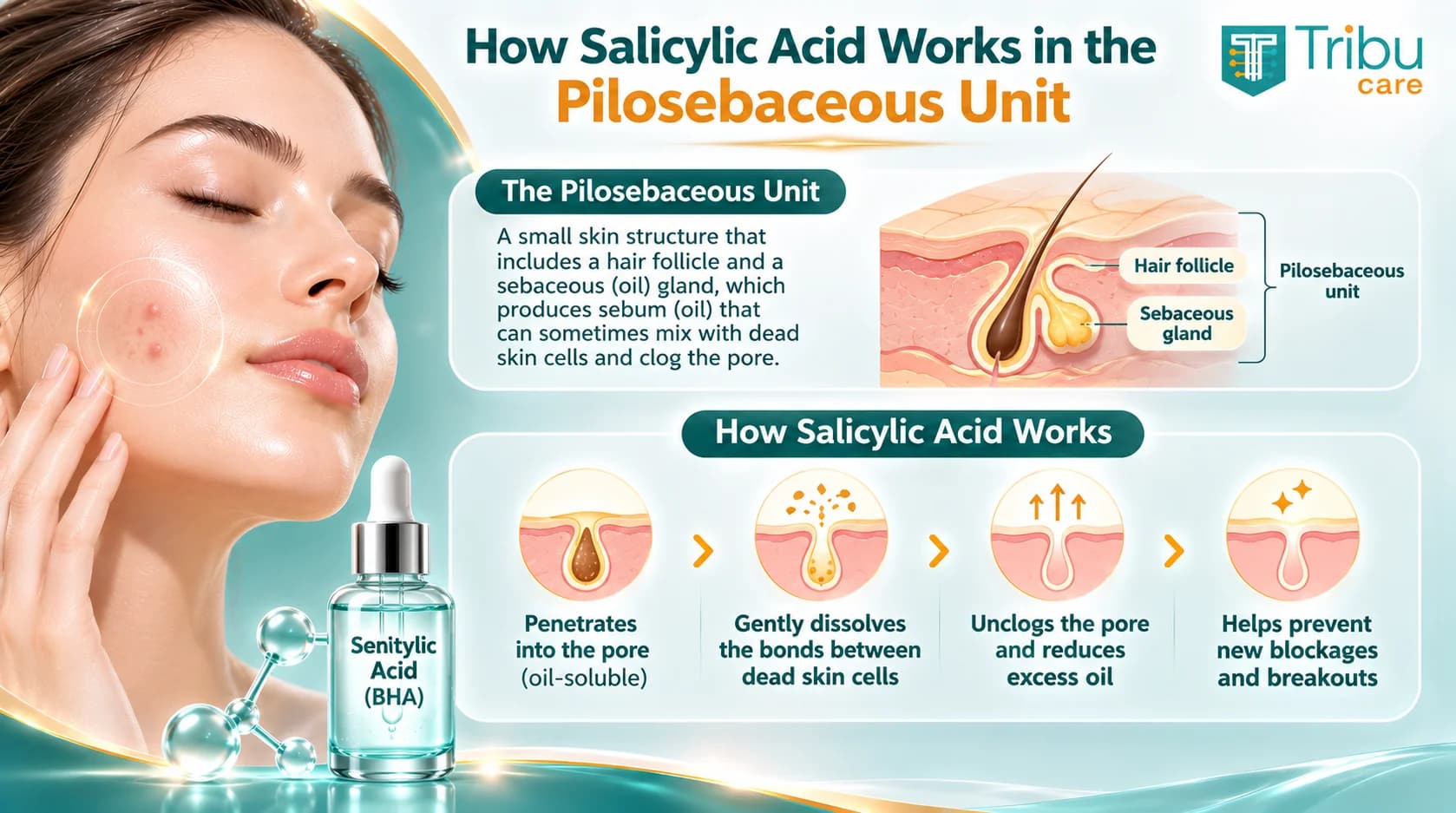
Salicylic acid is lipophilic, so it penetrates sebum-filled follicles and dissolves the intercellular bonds of keratinocytes, which loosens comedones and helps reduce the appearance of clogged pores.
Unlike water-soluble alpha-hydroxy acids, salicylic acid dissolves in lipids and acts within the follicular canal as well as on the stratum corneum surface. It also has mild anti-inflammatory activity related to its salicylate structure (Arif, 2015).
| Property | Salicylic acid (BHA) |
|---|---|
| INCI name | Salicylic Acid |
| Class | Beta-hydroxy acid |
| Solubility | Lipophilic; oil-soluble |
| Primary action | Keratolytic and comedolytic exfoliation |
| Secondary action | Mild anti-inflammatory effect |
| Typical target | Follicular openings, oily and blemish-prone skin |
The action is on retention hyperkeratosis, the first step of comedone formation. It does not reduce sebum production in a lasting way and has no direct effect on Cutibacterium acnes, which is why it is often paired with agents that address those factors.
Choosing a Salicylic Acid Gel by Skin Type
Gel vehicles suit oily and combination skin, while dry or sensitive skin generally tolerates gentle formulas with soothing ingredients and a lower frequency of use better.
Selection rests on skin type, the lesion type being treated and tolerance, not on brand popularity or online ratings. Consumer reviews and rankings are not clinical evidence, so practitioners should rely on the labelled ingredients and the patient's skin assessment.
| Skin type | Suitability | Practical note |
|---|---|---|
| Oily | Well suited | Gel or foam formulas; start once daily and increase as tolerated |
| Combination | Suitable | Apply to the T-zone and blemish-prone areas |
| Normal | Suitable for occasional blemishes | Spot or short-frequency use |
| Dry | Use with caution | Pair with a moisturiser; consider lower frequency |
| Sensitive or reactive | Use with caution | Patch test; gentle formulas with soothing agents |
| Eczema or active dermatitis | Avoid until the barrier recovers | Seek dermatological advice |
What to check on the label
- The declared concentration of Salicylic Acid, and whether it is a leave-on or rinse-off product.
- Supporting ingredients such as niacinamide, zinc PCA or aloe, which are used to help balance sebum and soothe the skin.
- Fragrance and essential oils, which may irritate sensitive skin.
- Instructions on sunscreen use and frequency.
Combinations: Pairing Salicylic Acid With Other Actives, and What to Avoid
Salicylic acid combines well with sebum-regulating and soothing actives, but layering it with other exfoliants, retinoids or benzoyl peroxide increases dryness and irritation and should be staged or supervised.
| Partner | Rationale | Precaution |
|---|---|---|
| Niacinamide | Supports barrier and helps balance oiliness | Generally well tolerated |
| Zinc PCA | Used to help regulate sebum | Generally well tolerated |
| Aloe vera | Soothing, reduces the feeling of dryness | Low risk |
| Benzoyl peroxide | Complementary antibacterial action | Additive irritation; separate application times |
| Topical retinoid | Complementary effect on follicular keratinisation | Additive irritation; physician guidance advised |
| Alpha-hydroxy acids and peels | Overlapping exfoliation | Avoid stacking unless supervised |
| Broad-spectrum sunscreen | Protects exfoliated skin | Essential in the morning |
What to avoid
- Starting several new actives at the same time.
- Using on broken, sunburned or inflamed skin.
- Combining with aggressive scrubs, which add mechanical irritation.
- Applying around the eyes and on mucous membranes.
Salicylic Acid Safety: Irritation, Photosensitivity and Pregnancy
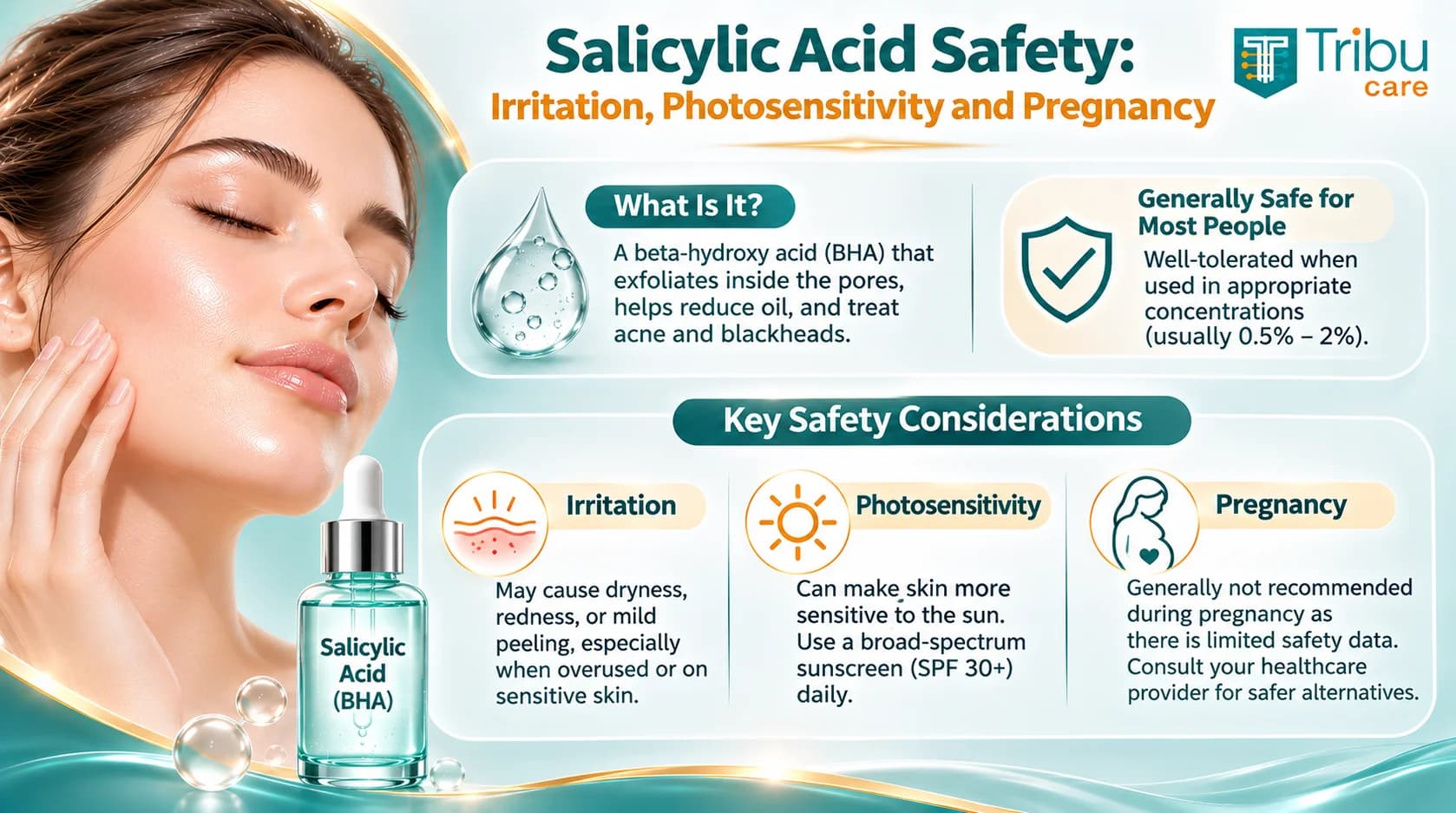
Salicylic acid gel is generally well tolerated on the face, but dryness, peeling, stinging and increased sun sensitivity are the most common effects, and salicylate hypersensitivity is a contraindication.
| Concern | Note |
|---|---|
| Irritation, dryness, peeling | Most frequent; related to concentration, frequency and combined actives |
| Photosensitivity | Exfoliated skin is more sun-sensitive; daily broad-spectrum sunscreen advised |
| Salicylate allergy | Contraindicated in patients with known salicylate or aspirin hypersensitivity |
| Contact dermatitis | Possible; patch test before first use |
| Large-area use | Systemic salicylate absorption is a concern mainly with extensive or prolonged application, and is less relevant to limited facial use |
Special groups
- Pregnancy and lactation: high-dose or large-area salicylate exposure is avoided; patients should consult their physician before using salicylic acid products.
- Children and adolescents: use only as labelled and under guidance.
- Sensitive skin and eczema: avoid until the barrier has recovered.
- Open wounds or broken skin: do not apply.
Stop use and seek advice if severe redness, swelling, blistering or persistent burning occurs. Persistent or scarring acne needs dermatological assessment.
Practical Protocol and Counselling for Clinic and Pharmacy
A practical protocol starts at a low frequency on clean, dry skin, builds up as tolerated, pairs the gel with a moisturiser and morning sunscreen, and reviews response after several weeks.
| Step | Consideration |
|---|---|
| 1. Assess | Skin type, lesion type (comedones, inflammatory lesions, marks), current actives |
| 2. Patch test | Small area before regular facial use |
| 3. Start slowly | Follow the product label; increase frequency as tolerated |
| 4. Support the barrier | Fragrance-free moisturiser; gentle cleanser |
| 5. Protect | Broad-spectrum sunscreen every morning |
| 6. Review | Reassess after several weeks; refer if inflammatory or scarring acne develops |
Counselling points
- Results are gradual and vary between individuals.
- Initial dryness or mild peeling can occur; reduce frequency rather than stopping at once.
- Do not pick or squeeze lesions, which raises the risk of marks.
- Moderate to severe, nodular or scarring acne needs medical treatment, not cosmetic products alone.
Frequently Asked Questions on Salicylic Acid Gel for Face
Is salicylic acid gel good for acne-prone skin?
It is a reasonable option for mild comedonal acne and oily skin, where it helps reduce the appearance of blemishes. Inflammatory or scarring acne needs medical assessment.
How often should it be applied?
Follow the product label. A common approach is to start at a low frequency and increase as tolerated, with a moisturiser and daily sunscreen.
Can it be used with niacinamide?
Yes. Niacinamide is commonly paired with salicylic acid and is generally well tolerated. It may help balance oiliness and support the skin barrier.
Is it safe in pregnancy?
Pregnant and breastfeeding patients should consult their physician before use. Large-area or high-dose salicylate exposure is avoided.
Does it fade acne marks?
It may indirectly help the appearance of marks through exfoliation and turnover, but it is not a primary pigment treatment. Sun protection is essential.
Conclusion: Salicylic Acid Gel for Face in Practice
Salicylic acid gel for face is a well-characterised, affordable-to-use keratolytic option that helps reduce the appearance of blemishes in oily, comedone-prone skin when selected by skin type and used with sun protection.
The evidence supports its role in mild comedonal acne and clogged pores, and is weaker for inflammatory acne and marks. Skin assessment, patch testing, staged introduction of actives and daily sunscreen matter more than the choice of any single product. Persistent, inflammatory or scarring acne should be assessed by a dermatologist.
TribuCare's cosmetic portfolio can complement a clinician-led plan. Ask your dermatologist before starting.
References
- Arif T. Salicylic acid as a peeling agent: a comprehensive review. Clinical, Cosmetic and Investigational Dermatology. 2015.
- Zaenglein AL, Pathy AL, Schlosser BJ, et al. Guidelines of care for the management of acne vulgaris. Journal of the American Academy of Dermatology. 2016.
Related Reading
More insights from TribuCare
Clinical Practice
Kojic Acid Cream Benefits: Evidence, Safety and Clinical Use for Practitioners
Kojic acid cream benefits explained: tyrosinase inhibition, evidence in melasma and post-inflammatory pigmentation, combinations and safety precautions.
November 30, 2026Clinical Practice
Biotin for Hair: Evidence, Dosage and Clinical Considerations for Practitioners
Biotin for hair: what the evidence says on hair growth, deficiency, dosage, lab-test interference and when supplementation is justified.
November 1, 2026Beauty Innovation
Liposomal Glutathione Benefits: Evidence, Bioavailability and Safe Use for Practitioners
Liposomal glutathione benefits explained: antioxidant role, absorption, evidence for skin, liver and immune support, safety precautions and practical use.
November 1, 2026